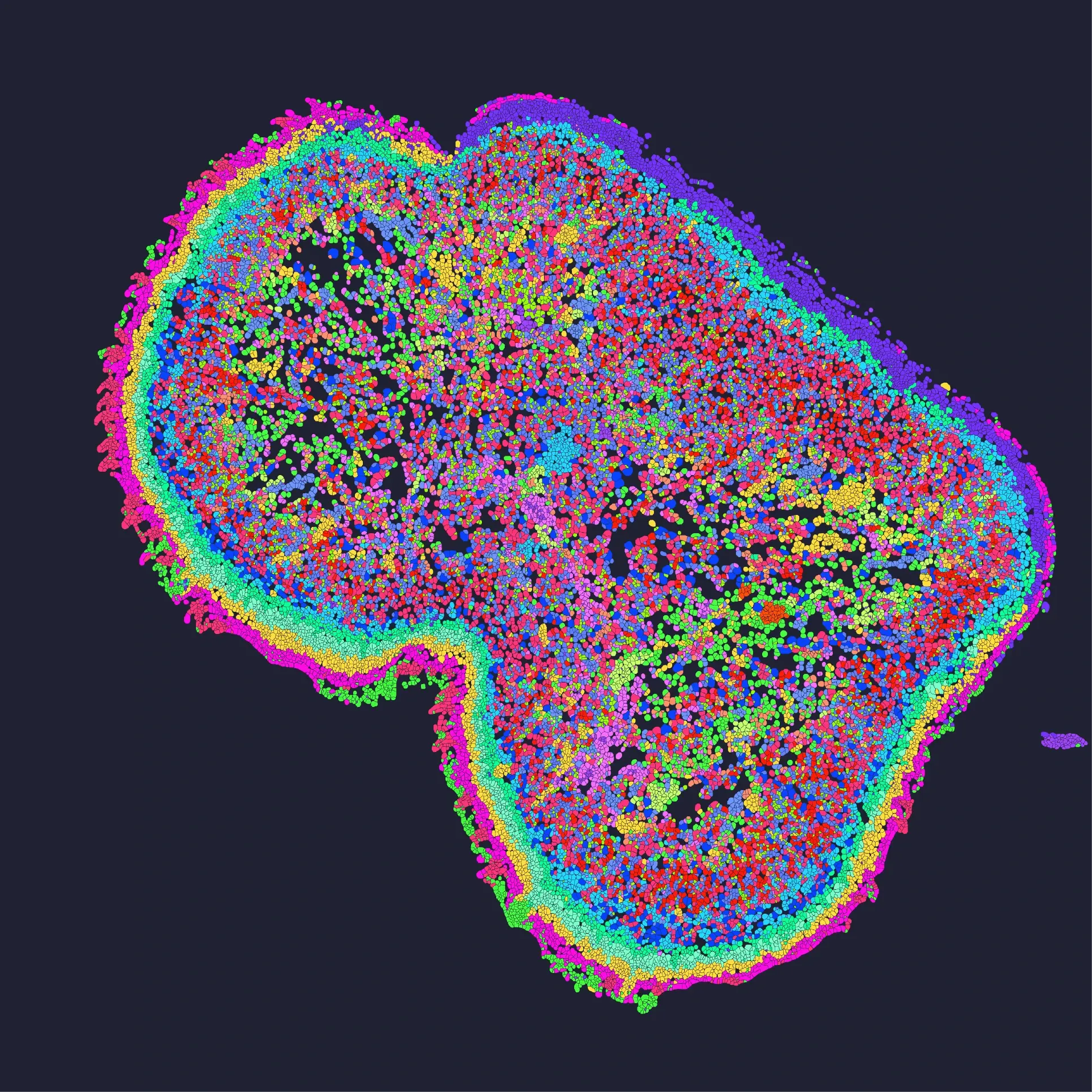

High-Throughput Spatial Transcriptomics
Whole-transcriptome spatial discovery. At scale.
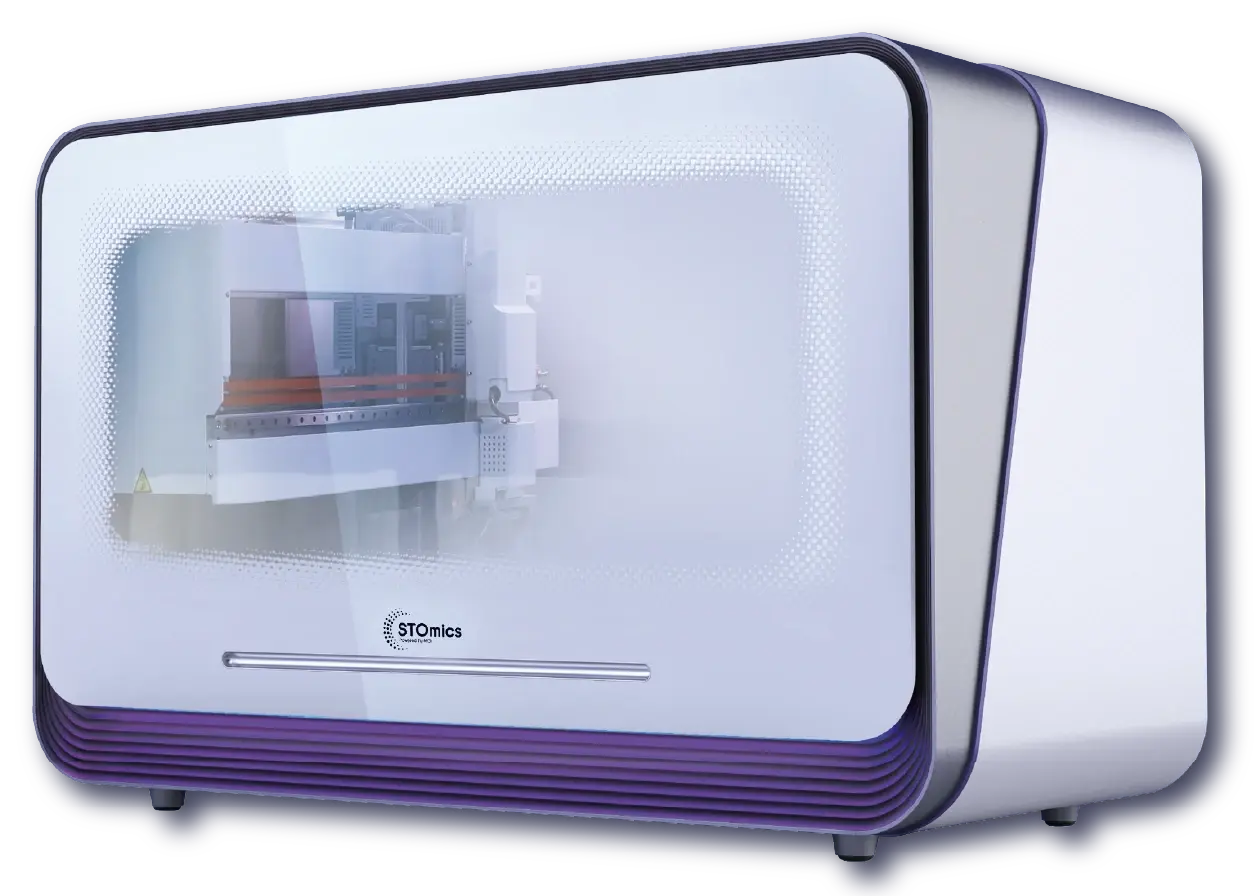
SCALABLE SPATIAL INSIGHTS FOR COMPLEX BIOLOGICAL SYSTEMS.
As spatial transcriptomics studies become larger and more complex, the need for scalable, consistent and cost-effective workflows is growing.

DISCOVER MORE
WITH STEREO-SEQ
STOmics Stereo-seq (SpaTial Enhanced REsolution Omics-sequencing) is a sequencing-based spatial transcriptomics technology that enables researchers to map gene expression across intact tissue sections while preserving spatial information.
Unlike targeted imaging approaches that measure predefined gene panels, Stereo-seq enables whole-transcriptome discovery, providing a comprehensive view of gene expression across a wide variety of tissue types and all species.
STEREO-SEQ OFFERS SEVERAL KEY ADVANTAGES:
- Whole-transcriptome discovery: Explore gene expression without restricting analysis to a predefined panel of genes.
- High spatial resolution: DNA nanoball array technology provides 220 nm centre-to-centre feature spacing, enabling high-resolution mapping of transcript distributions.
- Large tissue coverage: Flexible chip formats accommodate larger tissue sections and anatomical structures.
- Broad species compatibility: Whole-transcriptome profiling supports research across human, animal, plant and other organisms, subject to sample and assay compatibility.
- Flexible sample types: Dedicated workflows support fresh-frozen and FFPE tissue.
- Scalability: Automated processing enables consistent, reproducible workflows across larger sample numbers.
EXPLORE OUR SPATIAL PLATFORMS

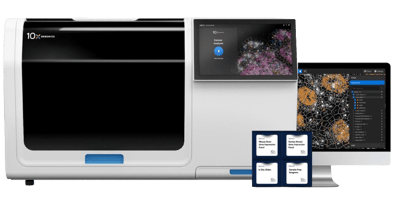
Xenium In Situ
Visualise selected RNA targets and protein markers within intact tissue to investigate cell types, cellular neighbourhoods and tissue organisation.

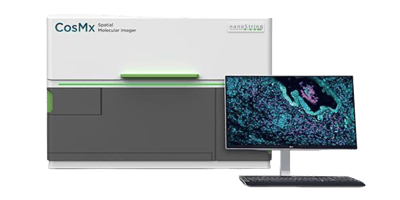
CosMx SMI

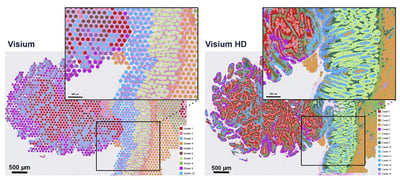
Visium HD
High-resolution transcriptome-wide discovery

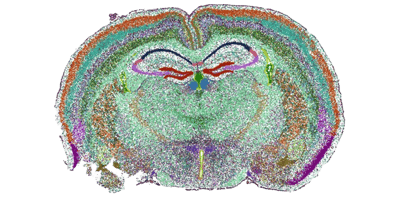
Stereo-seqTM
Whole-transcriptome spatial profiling at scale
Profile gene expression across diverse species and tissue types, including fresh-frozen and FFPE samples, with options for automated, large-scale studies.
SPATIAL TRANSCRIPTOMICS FOR FRESH-FROZEN AND FFPE TISSUES
SAGC offers complementary Stereo-seq workflows to accommodate different sample types and research objectives.

Stereo-seq v1.3
Fresh-Frozen Tissue
Stereo-seq v1.3 enables high-resolution, whole-transcriptome spatial profiling of fresh-frozen tissue sections. The technology is particularly well suited to discovery-driven studies where researchers want to investigate gene expression without being limited to predefined gene panels.
Ideal applications include:
- Developmental biology and organogenesis
- Plant and agricultural research
- Neuroscience and tissue atlasing
- Comparative and non-model organism studies
- Spatial heterogeneity in complex tissues
Learn more about Stereo-CITE - Protein + RNA from same tissue section
Stereo-seq OMNI
Spatial Total RNA for FFPE Samples
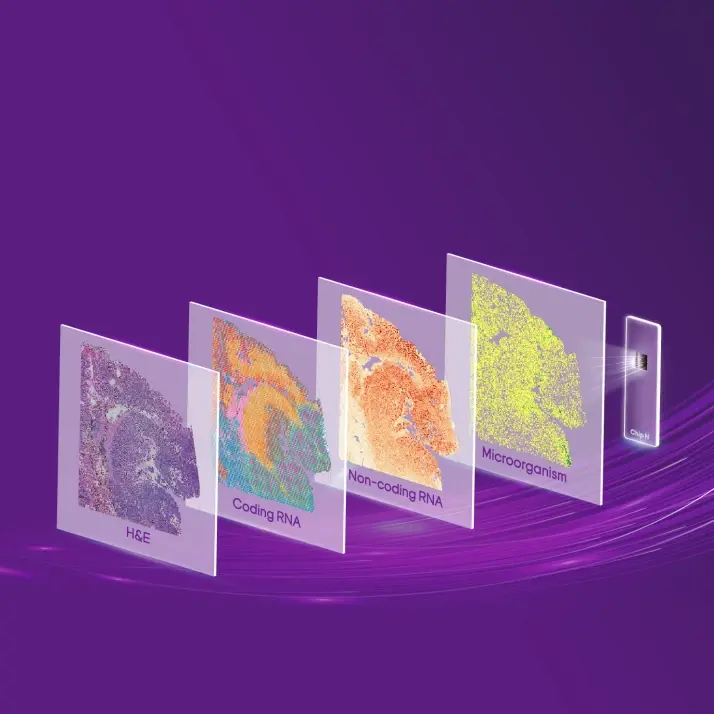
Stereo-seq OMNI extends spatial transcriptomics to formalin-fixed, paraffin-embedded (FFPE) tissues, unlocking opportunities to investigate archived clinical and research specimens. Using a total RNA approach with ribosomal RNA depletion, OMNI captures a broader range of RNA species than conventional poly(A)-focused workflows, including coding and non-coding transcripts.
This makes OMNI particularly valuable for researchers investigating complex disease biology, archival tissue collections and molecular interactions within the tissue microenvironment.
Key applications include:
- Coding and non-coding RNA
- lncRNA and other regulatory transcripts
- Host–pathogen interactions and microbial RNA
- Tumour and immune microenvironments
- Cell states and spatially organised biological pathways
Learn More About Stereo-seq OMNI

SCALING UP SPATIAL TRANSCRIPTOMICS:
Automated STOmics platform for large-scale spatial studies
Greater scalability
Support larger sample cohorts, multiple experimental conditions and complex study designs without a proportional increase in manual processing.For ambitious research designs

Make larger spatial studies more practical, including projects involving multiple time points, tissue regions, biological replicates and experimental conditions.More efficient processing, lower costs at scale
Streamlined workflows reduce hands-on time and laboratory resource demands, lowering per-sample processing costs for larger studies.Improved consistency and reproducibility

Standardised automated workflows help minimise operator-dependent variability and improve consistency across samples and processing batches.With automation integrated into SAGC's spatial workflows, researchers can explore study designs that may previously have been constrained by processing capacity, complexity or cost.
ENABLING LARGE-SCALE SPATIAL RESEARCH
High-throughput spatial transcriptomics opens opportunities to investigate biological processes across larger sample numbers, developmental stages and experimental conditions.
Spatiotemporal Biology
Understand how gene expression and cellular organisation change over time. By profiling tissues across developmental stages, disease progression or treatment time points, researchers can investigate the spatial dynamics of biological processes and identify changes in cellular interactions and molecular pathways.
3D Tissue Reconstruction and Organogenesis
Build a more comprehensive understanding of tissue architecture through spatial profiling of serial sections. Stereo-seq can support studies that integrate multiple tissue sections to reconstruct three-dimensional molecular patterns, providing insights into organ development, tissue organisation and complex anatomical structures.
Large-Scale Disease and Clinical Cohorts
Investigate spatial heterogeneity across larger collections of tissue samples. Automated spatial workflows can help support comparative studies involving patient cohorts, disease subtypes, treatment groups and longitudinal collections, enabling more systematic investigation of spatial molecular variation.
Non-Model Organism Research
Most targeted panels are limited to human or mouse. Explore spatial gene expression in non-model organisms and combined species tissue, such as PDX models.
Tissue Atlases and Reference Maps
Larger-scale spatial profiling can support the development of tissue atlases and reference datasets that reveal how cellular populations and molecular pathways are organised across complex biological systems.
END TO END SUPPORT - FROM TISSUE TO ANALYSIS
At SAGC, we support researchers throughout the spatial transcriptomics workflow, from experimental planning and sample preparation through to sequencing and downstream analysis.
Our team can assist with:
-
Experimental design: Technology selection, tissue requirements, sample numbers and study design.
-
Sample preparation and histology: Guidance on tissue collection, preservation, sectioning and quality control.
-
Spatial library preparation: Stereo-seq workflows for fresh-frozen and FFPE tissues, including automated processing where applicable.
-
High-throughput sequencing: Access to SAGC's sequencing infrastructure for spatial transcriptomics data generation
-
Bioinformatics and data analysis: Primary processing, spatial gene expression analysis and access to advanced spatial analysis solutions, including BioTuring SpatialX.
We work with researchers to identify the most appropriate workflow for their samples, research questions and project scale.

ANALYSING STOMICS DATA
We offer SAW pipelines for processing raw Stereo-seq sequencing data into spatial gene expression datasets and BioTuring’s SpatialX cloud-based tools.
STOmics Analysis Workflow (SAW) –
Primary Data Processing
The STOmics Analysis Workflow (SAW) is a dedicated bioinformatics pipeline for processing Stereo-seq data. It performs essential primary analysis steps, including sequencing quality control, read alignment, spatial barcode mapping, gene expression quantification and cell segmentation. SAW generates spatially resolved gene expression matrices and visualisation-ready datasets for downstream analysis.
BioTuring SpatialX – Advanced Spatial Data Analysis
BioTuring SpatialX is a cloud-based analysis platform that enables researchers to explore, visualise and interpret complex spatial transcriptomics datasets without extensive coding expertise. Compatible with Stereo-seq data following primary processing, SpatialX supports cell type annotation, spatial neighbourhood analysis, differential gene expression, cross-sample comparisons and interactive tissue visualisation. Its intuitive interface and advanced analytical tools help researchers move efficiently from spatial data to biological insights.
Featured Publications
Liu Z, Bian X, Luo L, et al. Spatiotemporal single-cell roadmap of human skin wound healing. Cell Stem Cell. 2025;32(3):479–498.e8. doi:10.1016/j.stem.2024.11.013.
https://pubmed.ncbi.nlm.nih.gov/39729995/
Zhao Y, Li Y, He Y, et al. Stereo-seq V2: Spatial mapping of total RNA on FFPE sections with high resolution. Cell. 2025;188(23):6554–6571.e21. doi:10.1016/j.cell.2025.08.008.
https://pubmed.ncbi.nlm.nih.gov/40882628/
Pan J, Li Y, Lin Z, et al. Spatiotemporal transcriptome atlas of human embryos after gastrulation. Nature. 2026;654(8119):751–761. doi:10.1038/s41586-026-10545-0. https://pubmed.ncbi.nlm.nih.gov/42203883/