Scientific Advisory Committee
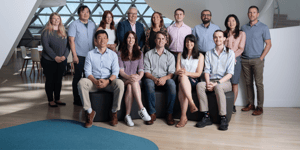
Scientific Advisory Committee (SAC)
The SAC is comprised of local researchers, clinicians, consumers, and other important stakeholders. The role of the SAC is to advise and support the SAGC Steering Committee and provide input into the strategic direction of the SAGC..png?width=300&name=BBerger_Profile_BW(2).png)
Adelaide University
The Australian Wine Research Institute
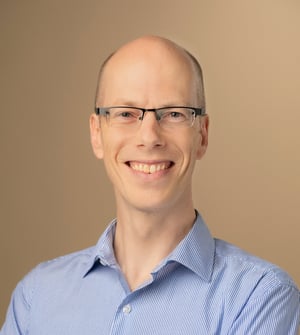
Associate Professor Pascal Duijf received a PhD degree in Human Genetics from Radboud University Nijmegen in the Netherlands. As a postdoctoral fellow, he trained in cancer biology and genetics at Memorial Sloan-Kettering Cancer Center in New York. He then moved to Brisbane, first to University of Queensland and then to Queensland University of Technology, to establish and lead a research group studying genomic instability in cancer. Currently, he is an Enterprise Fellow at UniSA, within the Centre for Cancer Biology and UniSA Clinical and Health Sciences. His research aims to study genomic instability in cancer in order to understand underlying mechanisms and develop new treatment options for patients. To that end, his group uses a broad range of wet-lab and dry-lab tools, including in cell biology, genome engineering, mouse models, pathology, cancer genomics, bioinformatics and computational biology.

Flinders Accelerator for Microbiome Exploration (FAME)
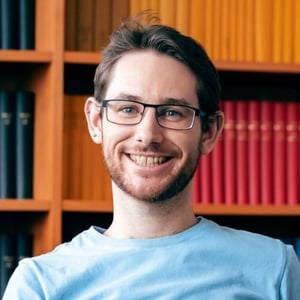
Dr Luke Isbel is a group leader, holding a joint appointment at The South Australian immunoGENomics Cancer Institute (SAiGENCI) & The Adelaide Centre for Epigenetics (ACE), located within the University of Adelaide. He runs an inclusive & creative team aiming to understand how epigenetic forces (i.e. on chromatin) serve as a guiding force to direct gene regulatory machinery in cells. This involves fundamental & applied models, particularly around the genomic regulatory factors that are frequently mutated in cancer.
Luke returned to Australia in late 2023 to establish his own laboratory, after his PhD with Professor Emma Whitelaw and a postdoctoral position in Basel, Switzerland with Professor Dirk Schübeler. He has held prestigious Fellowships - the Marie Sklodowska-curie Fellowship (EU) & CJ Martin Early Career Fellowship (NHMRC), & is currently a Viertel Senior Medical Research Fellow. He is the recipient of the 2019 Chiquet-Ehrismann prize, the 2024 Max Burger prize & the 2024 Lorne Genome Mid-Career Prize.
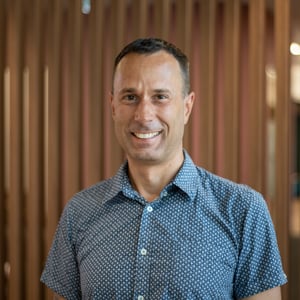
Bastien is an evolutionary geneticist with a strong interdisciplinary background in genomics and biomedical research, trained in France and Canada before relocating to Australia in 2008. He leads the Molecular Anthropology Group at the Australian Centre for Ancient DNA (ACAD), where he applies cutting-edge archaeogenomic, genomic and bioinformatic approaches to explore human evolution, adaptation, and population history. His research focuses on integrating ancient and modern Indigenous genetic diversity, with a particular emphasis on ethical and inclusive practices in genomics.
He holds concurrent appointments at the National Centre for Indigenous Genomics at the Australian National University, and in the Indigenous Genomics team at the Kids Research Institute. Bastien is deeply involved in mentoring, capacity building, and national efforts to strengthen Indigenous participation and leadership in genomic research.


Flinders University
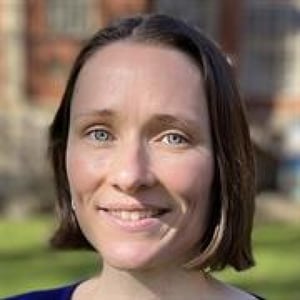
Dr Anna Sheppard is a Lecturer in Bioinformatics at the University of Adelaide. Her research applies bacterial whole-genome sequencing to study the epidemiology and transmission of pathogens within outbreaks and across geographic and ecological boundaries, with a focus on antimicrobial resistance driven by mobile genetic elements. She has developed novel methods for tracking resistance genes, and her work has been published in leading journals including NEJM, Nature Microbiology, and PNAS. Anna completed her PhD at the University of Adelaide in 2009, followed by postdoctoral training at Kiel University (Germany) and the University of Oxford (UK). She returned to Adelaide as a Lecturer in 2021.
.jpeg?width=300&name=Ying%20(1).jpeg)
Ying is a Research Fellow at the Adelaide University. Her research, supported by an international fellowship from Breakthrough T1D, focuses on Type 1 Diabetes (T1D) immunogenomics, with the primary aim of identifying early immune signatures and genetic changes linked to disease progression in children at risk using techniques such as single-cell and bulk transcriptomics, epigenetic profiling and computational analysis. Ying works closely with the ENDIA consortium, integrating longitudinal genomic data to identify early markers and potential therapeutic targets for T1D. She also actively contributes to training and capacity building, providing expertise in genomic protocols and bioinformatics to researchers locally and nationally. Ying is interested in translating genomic findings into meaningful outcomes. She actively engages in collaborations and exploring new computational methods to advance personalized medicine for autoimmune diseases.