Skip to content
Stereo_CITE background

Spatial Proteomics

Spatial proteomics enables the measurement of protein expression within intact tissue architecture, providing critical insight into cell function, signalling, and interactions in situ. When combined with spatial transcriptomics, these approaches offer a powerful multiomic view of tissue biology at cellular and subcellular resolution.

Our Spatial Multiomic (RNA + Protein) Platform Options

At SAGC, we offer a range of spatial multiomic platforms to support both discovery-driven and targeted research applications across translational and basic science.
Human or Mouse / Fresh Frozen Tissue

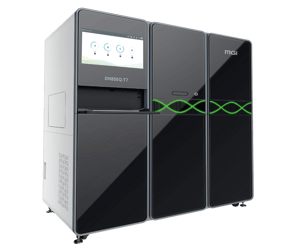
Stereo-CITE (STOmics MGI)

Whole-transcriptome and high-plex protein profiling at single-cell resolution

Unbiased RNA + 120-150 Protein Targets

Stereo-CITE enables unbiased spatial profiling of the entire transcriptome alongside hundreds of protein markers on the same tissue section. This makes it a powerful platform for discovery applications requiring deep molecular and spatial context.
•    Simultaneous RNA and protein detection
•    Single-cell resolution across large tissue areas
•    High-plex protein capability
•    Ideal for exploratory and atlas-scale studies

Stereo-CITE Website

BioLegend Human Panel (154 Targets)

The TotalSeq™-A Human Universal Cocktail is designed for multiomics immune cell profiling and includes targets for 154 cell surface markers, including principal lineage antigens (plus 9 isotype controls.

BioLegend Mouse Panel (119 Targets)

The TotalSeq™-A Mouse Universal Cocktail is designed for multiomic immune cell profiling and targets 119 cell surface markers, including principal lineage antigens (plus 9 isotype controls).

Human / FFPE Tissue

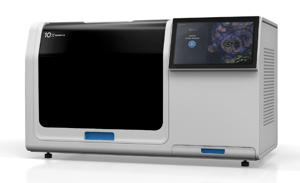
Visium HD (10x Genomics)

Spatial RNA and protein analysis for FFPE tissues

CytAssist Enabled RNA and Protein Detection

Visium HD integrates probe-based transcriptomics with antibody-derived protein detection, enabling spatial multiomic analysis in clinically relevant FFPE samples.
•    Combined RNA and targeted protein detection
•    Optimised for FFPE workflows
•    High-resolution spatial mapping
•    Compatible with established Visium pipelines

Visium Spatial Website

Human or Mouse / FFPE or Fresh Frozen Tissue

CosMx Spatial Molecular Imager (SMI) (Bruker Spatial)

Protein panels (up to 72-plex) for Human IO or Mouse Neuro, can be combined with large RNA panels: 1K, 6K, 19K

High-plex spatial multiomics at subcellular resolution

CosMx SMI is an imaging-based platform enabling highly multiplexed RNA and protein detection within the same cell, supporting detailed interrogation of tissue microenvironments.
•    RNA panels: 1K, 6K, and 19K targets
•    Protein panels (up to ~64–72 plex)
•    Subcellular resolution
•    Same-cell multiomic profiling

Visit Bruker Spatial CosMx Protein

Human Immuno-Onc Panel

Mouse Neuro Panel

Human / FFPE Tissue

Xenium In Situ Analyzer (10x Genomics)

Combine v1 gene panels with up to 27 proteins on same tissue.

Targeted spatial transcriptomics with protein co-detection

Xenium enables high-sensitivity, targeted RNA detection with optional protein panels, allowing precise spatial mapping of defined cell populations and pathways.
•    Targeted gene panels (100s of transcripts)
•    Protein panel add-on (up to ~27 markers)
•    Subcellular resolution
•    Automated imaging-based workflow

Xenium Protein Panel Information

Our Spatial Multiomics Platforms

Visium CytAssist
Visium HD (10X Genomics)

Human Only

FFPE

T7 No Background
Stereo-CITE (MGI STOmics)

Human (154) or Mouse (119)

Fresh Frozen

Instrument_CosMx_WormsEye_iso
CosMx® Spatial Molecular Imager

Human (72) or Mouse (64)

Fresh Frozen or FFPE

Xenium instrument
Xenium Protein Panels (10X Genomics)

Human (27)

FFPE


Planning Your Spatial Proteomics Experiment

Choosing the right platform depends on your experimental goals, sample type, and required level of resolution. Consider the following:

Discovery vs targeted approaches:
o    Unbiased profiling OR Targeted panels

Sample type:
o    Fresh frozen OR Fixed-Formalin Paraffin-Embedded (FFPE)

Resolution and Plex:
o    Number of Protein Targets vs. Detection Sensitivity 
o    Cellular or Subcellular Resolution
o    Level of Support Required for Analysis

Our team can help guide platform selection and experimental design.