
.png?width=300&name=SAGC%20Website%20Header%20Images%20(8).png)
Microbiome - Antibiotic Selection in ICU
The Importance of Preserving the Gut Microbiome
Infection is one of the most pressing threats to patients in intensive care, often driving the need for rapid, broad-spectrum antibiotic use. However, new research from SAHMRI’s Microbiome and Host Health Program has revealed that some antibiotics—specifically those targeting anaerobic bacteria—may disrupt the gut microbiome more profoundly than previously understood.
The MOCI Study Group Investigators led a multi-centre, longitudinal study, involving 110 critically ill adults, to explore how antibiotic type and exposure shapes the balance of gut microbes during intensive care. The findings suggest that the selection of antibiotics with anaerobic coverage may unintentionally deplete beneficial gut bacteria that play a crucial role in immune regulation and infection resistance.
Measuring and analysing the bacterial populations in these patients involved collecting faecal samples from critically ill adults at 48 hr intervals. The microbiome (16S rRNA amplicon) sequencing performed by the SAGC identified a total of 386 taxa, which were then categorised into four distinct functional groups for analysis: Butyrogenic anaerobes, anaerobes without known butyrogenic function, other non-anaerobic commensals, and pathobionts. To interpret the measured bacterial populations, the study modeled the relative abundance, temporal changes, exposure time to different types of antibiotics, and various clinical and demographic factors, as well as use of other medications.
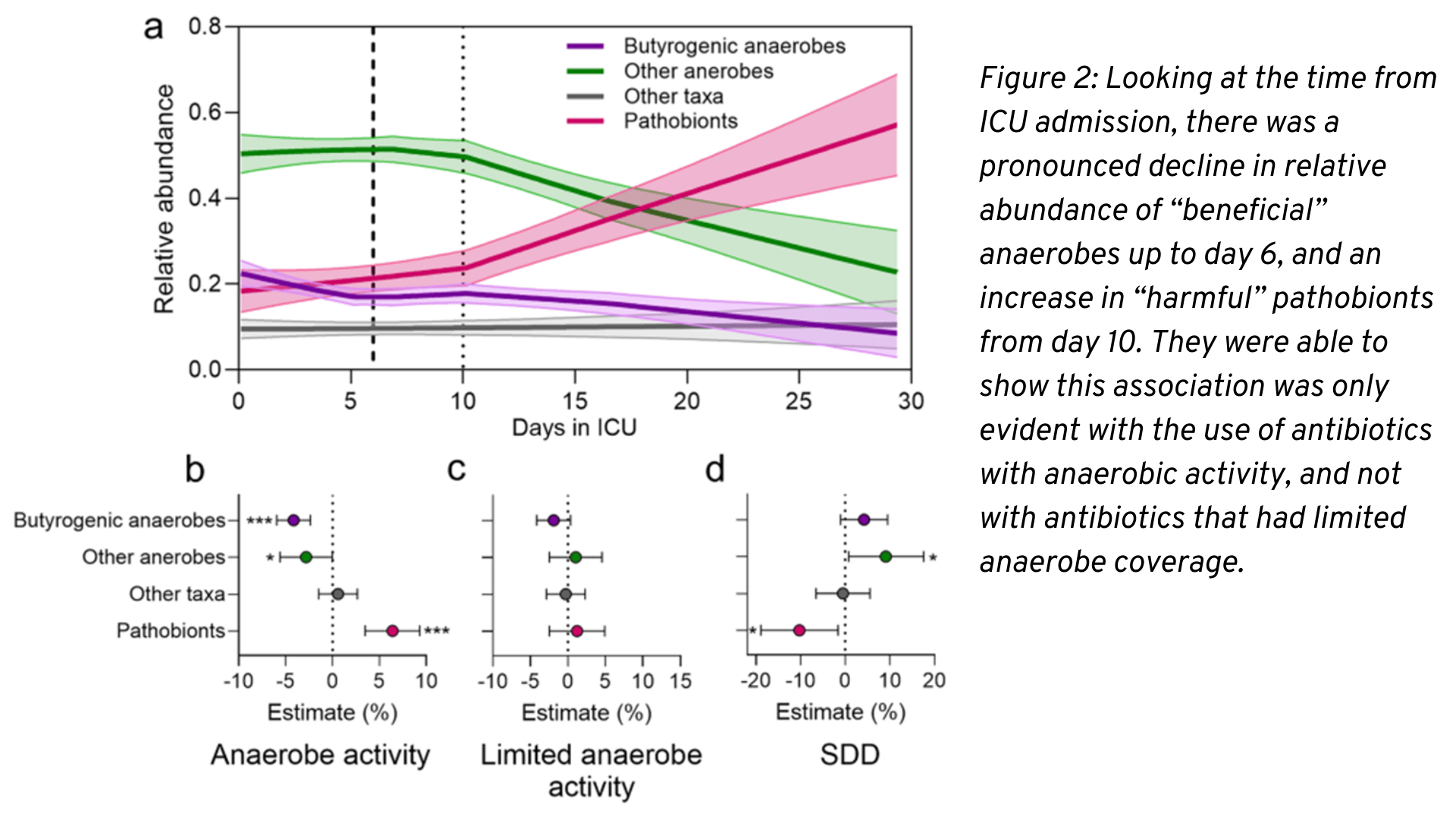
Looking at the time from ICU admission, there was a pronounced decline in relative abundance of “beneficial” anaerobes up to day 6, and an increase in “harmful” pathobionts from day 10. They were able to show this association was only evident with the use of antibiotics with anaerobic activity, and not with antibiotics that had limited anaerobe coverage.
Importantly, given the scope of this study and the relatively rare event of bacteraemia in hospitalised patients, the study was not able to show an association with events. Despite this limitation, the study still points to the potential benefits of limiting use of anti-anaerobic antibiotics to preserve “beneficial” gut microbes.
.png?width=2000&height=1133&name=Images%20-%20website%20collab%20pages%20(12).png "Images - website collab pages (12)")